







AI-Driven Enterprise Physiology Model
Modern enterprises are evolving from system-driven operations to intelligent, adaptive ecosystems. With the advent of AI-driven integration, systems are no longer mere conduits for data exchange—they are becoming decision-enabled, context-aware, and self-optimizing entities.
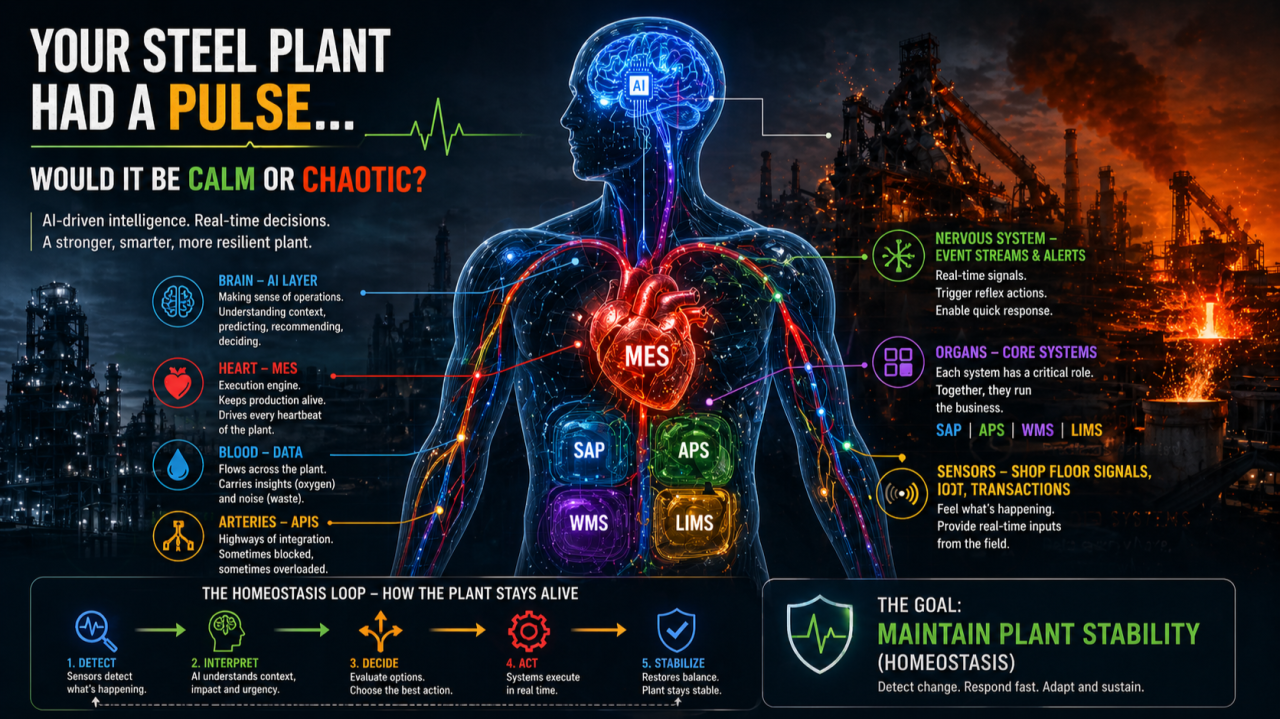
This article presents a conceptual framework that draws a parallel between the human body and enterprise systems, termed the Digital Physiology Model. This analogy helps in designing systems that are not only functionally integrated but also resilient, adaptive, and capable of sustaining Business-As-Usual (BAU) autonomously.
Foundational Shift in Integration Philosophy
Traditional Integration
- Focus: Data exchange between systems
- Nature: Rule-based, static
- Outcome: Human-driven decision-making
AI-Driven Integration
- Focus: Data + Context + Decision + Action
- Nature: Adaptive, intelligent
- Outcome: Assisted or autonomous decision-making
Definition: AI-driven integration enables systems to understand context, circumstance, and urgency of data, and to guide or make decisions that sustain and optimize BAU in real time.
Core Enterprise Physiology Mapping
Functional Extensions of the Analogy
Brain – AI Orchestration Layer
- Interprets signals across systems
- Prioritizes actions based on business impact
- Predicts outcomes and orchestrates responses
Heart – Execution Engine (MES)
- Drives continuous operations
- Any slowdown impacts the entire enterprise
Blood – Data
- Carries critical information (oxygen)
- Also carries noise/errors (waste)
- Requires filtering for meaningful insights
Nerves – Event-Driven Architecture
- Enables real-time signal transmission
- Supports reflex actions (sub-second decisions)
Hormones – Policies & AI Models
- Govern long-term behavior
- Influence strategic decisions
Lungs – External Interfaces
- Handle interactions with customers and vendors
- Enable inflow (orders) and outflow (deliveries)
Kidneys – Data Governance
- Cleanse and validate data
- Maintain data quality and balance
The Homeostasis Loop (Closed-Loop Decisioning)
Biological Loop
- Detect imbalance
- Signal brain
- Trigger response
- Restore balance
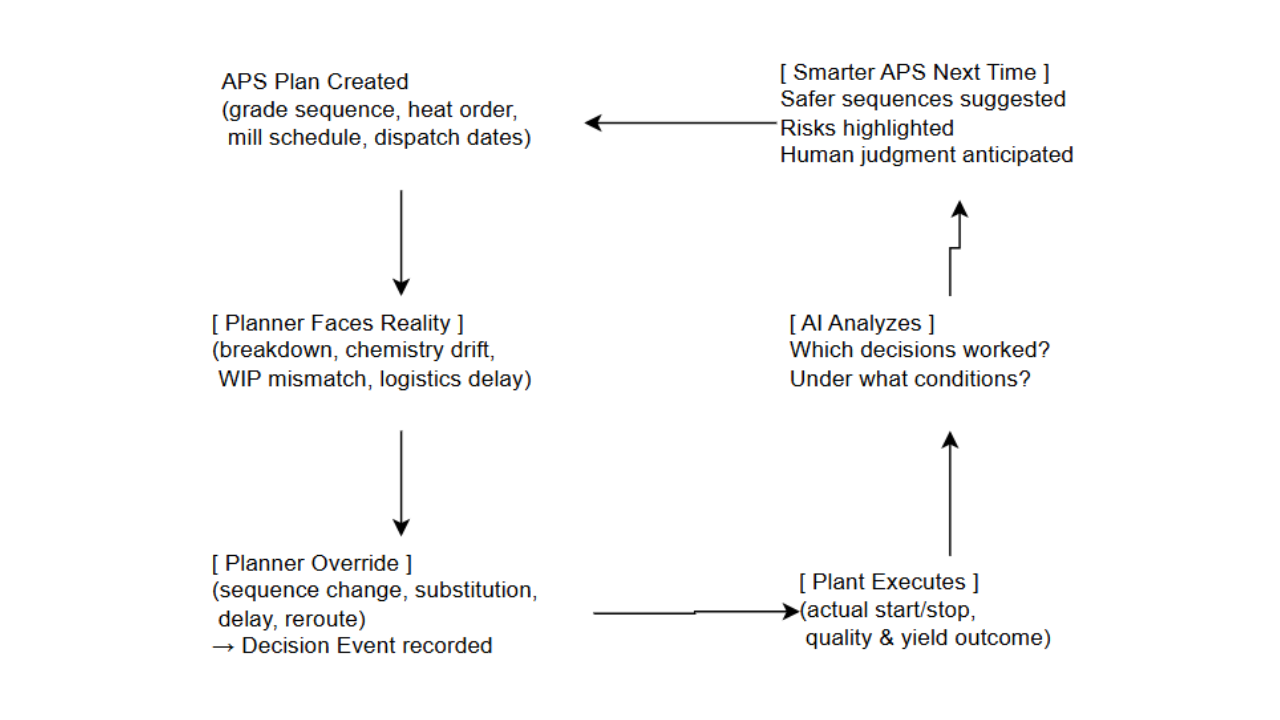
Enterprise Loop
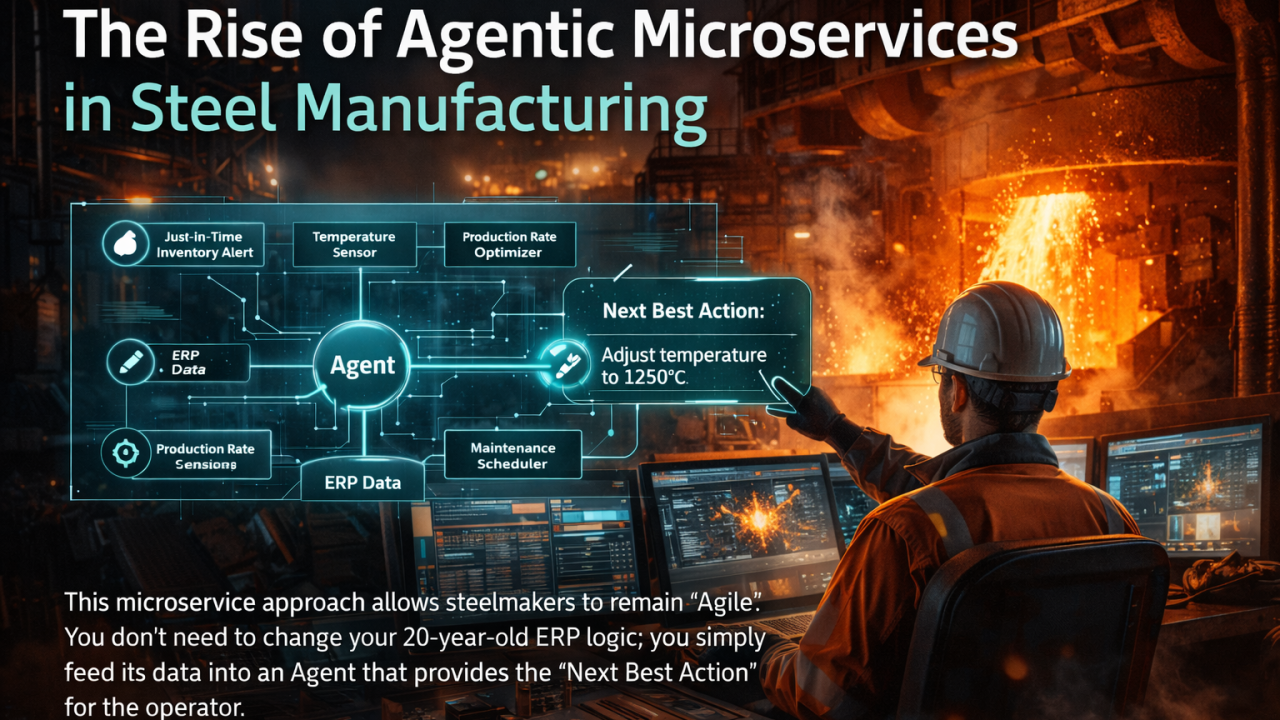
- Detect anomaly (via MES/WMS/LIMS)
- Interpret via AI (context + urgency)
- Trigger cross-system action (SAP/APS/WMS)
- Restore operational stability
Example: Yard congestion detection → AI-driven rescheduling → restored flow
Advanced Interpretation Layer
AI-driven integration operates on:
Context
Understanding the business relevance of data
Circumstance
Understanding surrounding conditions
Urgency
Determining time sensitivity
Decision Enablement
Evaluating alternatives and impacts
Action
Executing or recommending optimal actions
Exercise = Operational Fitness
Exercise prepares the body for stress. Similarly, enterprises must build resilience proactively.
Applications:
- Stress testing (demand spikes, failures)
- Scenario simulations (APS-driven what-if analysis)
- Continuous improvement via AI insights
Insight: Exercise = deliberate stress to build resilience
Nutrition = Data & Knowledge Quality
Data is the fuel for enterprise intelligence.
Key Elements:
- Clean and structured data
- Real-time data availability
- Context-rich (decision-grade) data
- Historical knowledge and learning
Insight: Poor data leads to poor decisions
Metabolism = Processing Efficiency
Represents how quickly the enterprise converts signals into actions.
- Slow: Delayed responses
- Fast: Real-time optimization
AI enhances the enterprise's metabolic rate.
Immunity = Resilience & Risk Management
- Early detection of disruptions
- Rapid containment and recovery
- Protection against systemic failures
AI acts as the enterprise's immune system.
Recovery = Learning Systems
Post-event analysis enables:
- Root cause identification
- Model and policy updates
- Continuous improvement
Outcome: Stronger system after every disruption
Integrated Loop
Biological
Nutrition → Exercise → Stress → Recovery → Strength
Enterprise
Data → Simulation → Events → Learning → Stronger System
Summary Statement
Data is nutrition. Simulation is an exercise. AI is metabolism. Resilience is immunity. Learning is recovery.
AI-driven integration transforms enterprises into living systems capable of sensing, adapting, and sustaining themselves autonomously.